Gluten Free Pizza Dough


This is the BEST gluten free pizza dough recipe! It’s so easy to make, perfectly chewy, holds together well (even with lots of toppings) and requires no kneading. Plus, this crust can be frozen for easy dinners throughout the week.
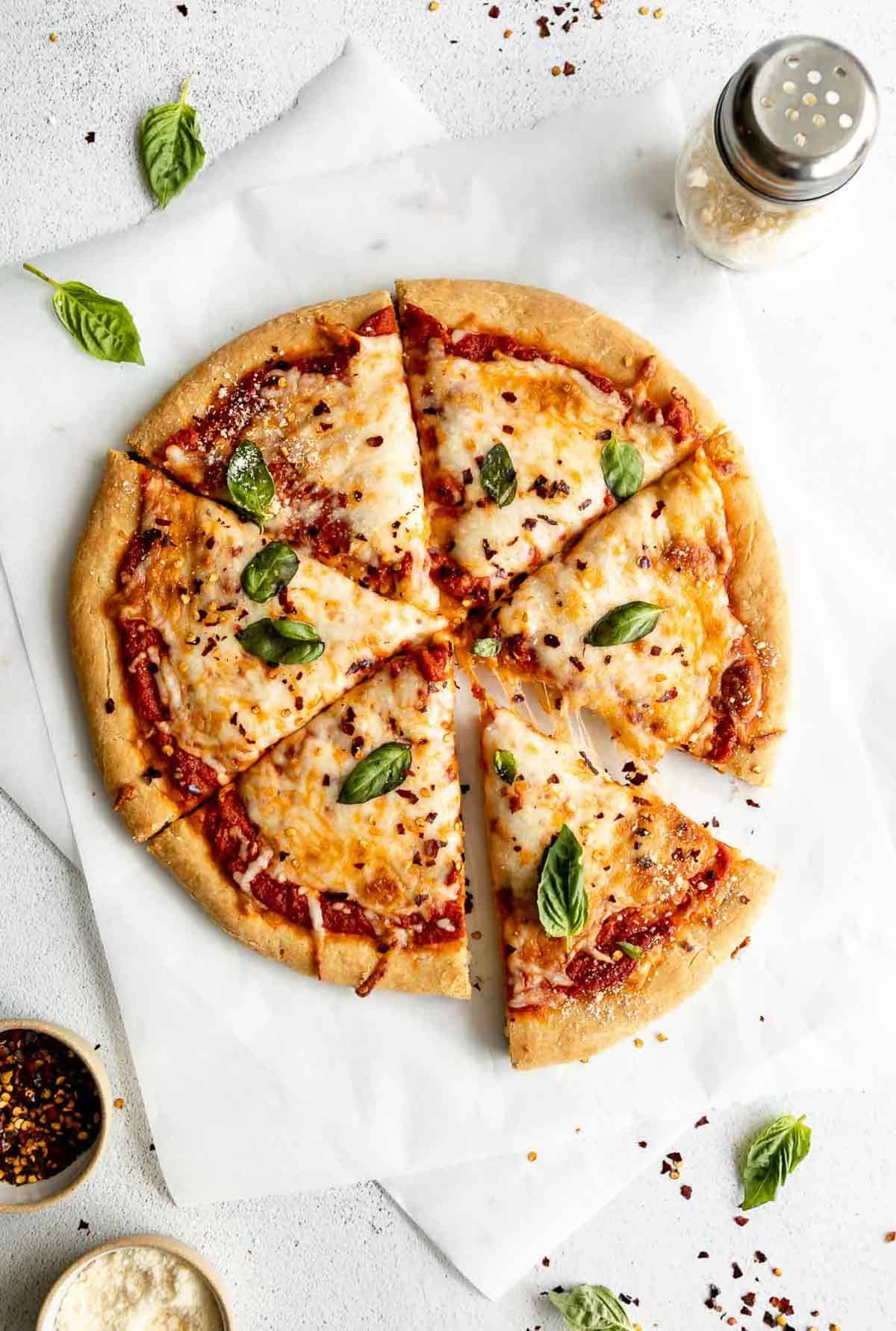
My go-to gluten free pizza dough! This crust recipe requires no kneading, is totally freezer friendly and can be made into a thick or thin crust depending on what you like! It only requires about 15 minutes of prep time, plus an hour to let the dough rise and then you’re good to go.
Pizza was one of those foods I missed most when I was diagnosed with Celiac, and while I love a cauliflower crust every now and then, sometimes you just need something that more closely replicates the real deal. There’s so many gluten free pizza doughs in restaurants these days, but cross contamination is a real issue so I opt to just make it at home!
This crust is thick and chewy and will definitely become a regular in your meal rotation! While this recipe is not vegan friendly, you can try my vegan gluten free pizza crust instead which is just as delicious and made without egg! Try my gluten free risotto or gluten free focaccia bread next!
Notes before we get started
- You need instant yeast for this recipe, not just regular active dry yeast. Instant yeast does not require proofing before adding to the dough, you can just add it right in with the other ingredients so it saves some time.
- You cannot make this pizza dough without yeast. The yeast is super important in this dough and gives it a classic chewy and fluffy texture. Be sure to use active instant yeast which requires just a short proof time of 1 hour.
- There’s a lot of flours you can use in pizza dough, but I think gluten free all purpose flour works best. Almond flour has a grainy texture, so we will stick with a mix with a base of rice flour to get that soft and chewy texture.
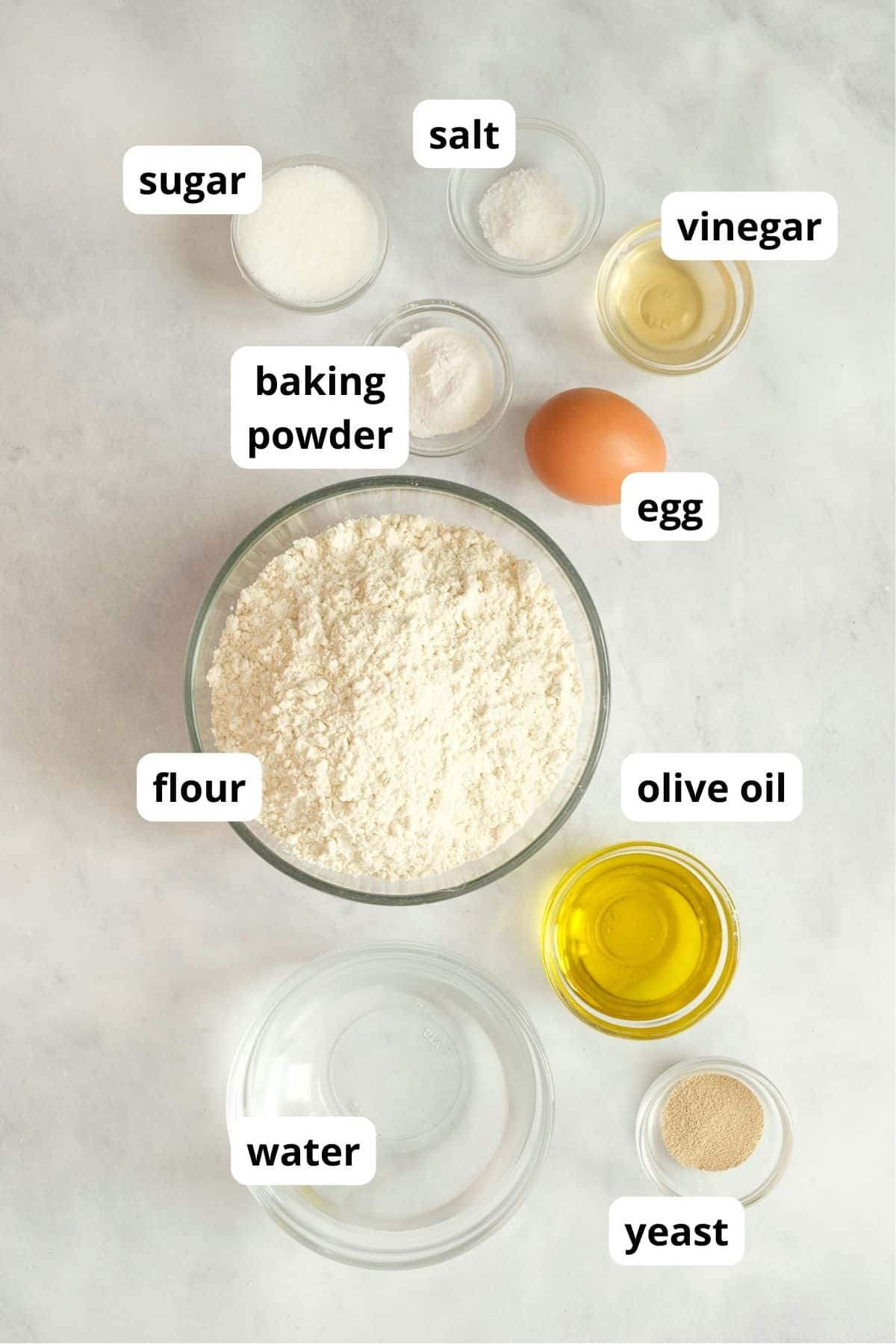
How to make gluten free pizza dough
Microwave the water for about 30 seconds or until it reaches 110-115 degrees Fahrenheit. You don’t want it too hot or it will kill the yeast, but it needs to be warm enough to activate the yeast.
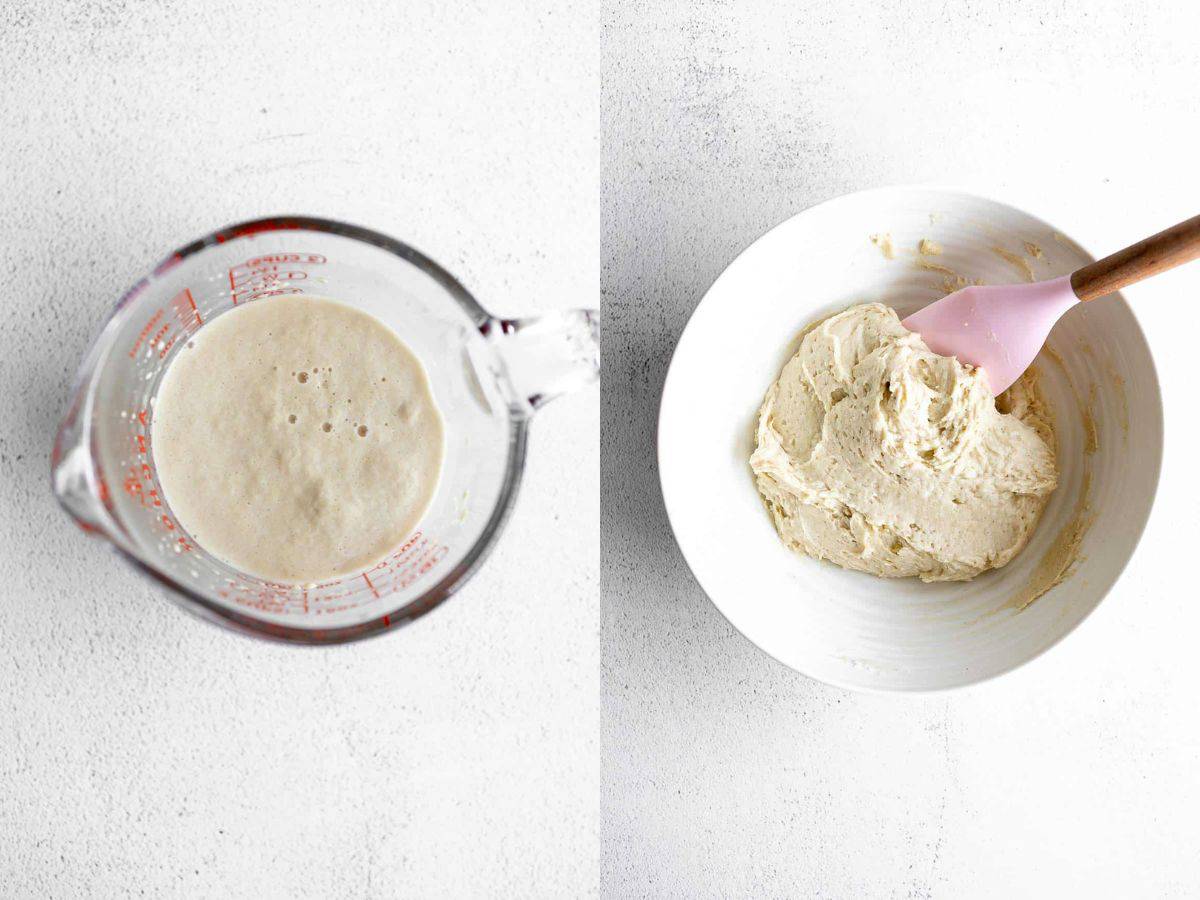
Mix in the sugar and one packet of yeast, stir together and let sit for 5 minutes. It should get quite foamy on top, which means the yeast is active and working!
Meanwhile, whisk together the flour, baking powder and salt. Add in the whisked egg, vinegar, olive oil and water/yeast mixture.
Mix together with a wooden spoon or rubber spatula until a dough forms. It will likely be a bit sticky at this point.
Cover with plastic wrap then cover with a towel and let sit in a warm place for 1 hour to rise. I like to put it in the oven. After 1 hour, preheat the oven to 425 and let the dough sit in the fridge for 15 minutes. This will make it easier to roll out.
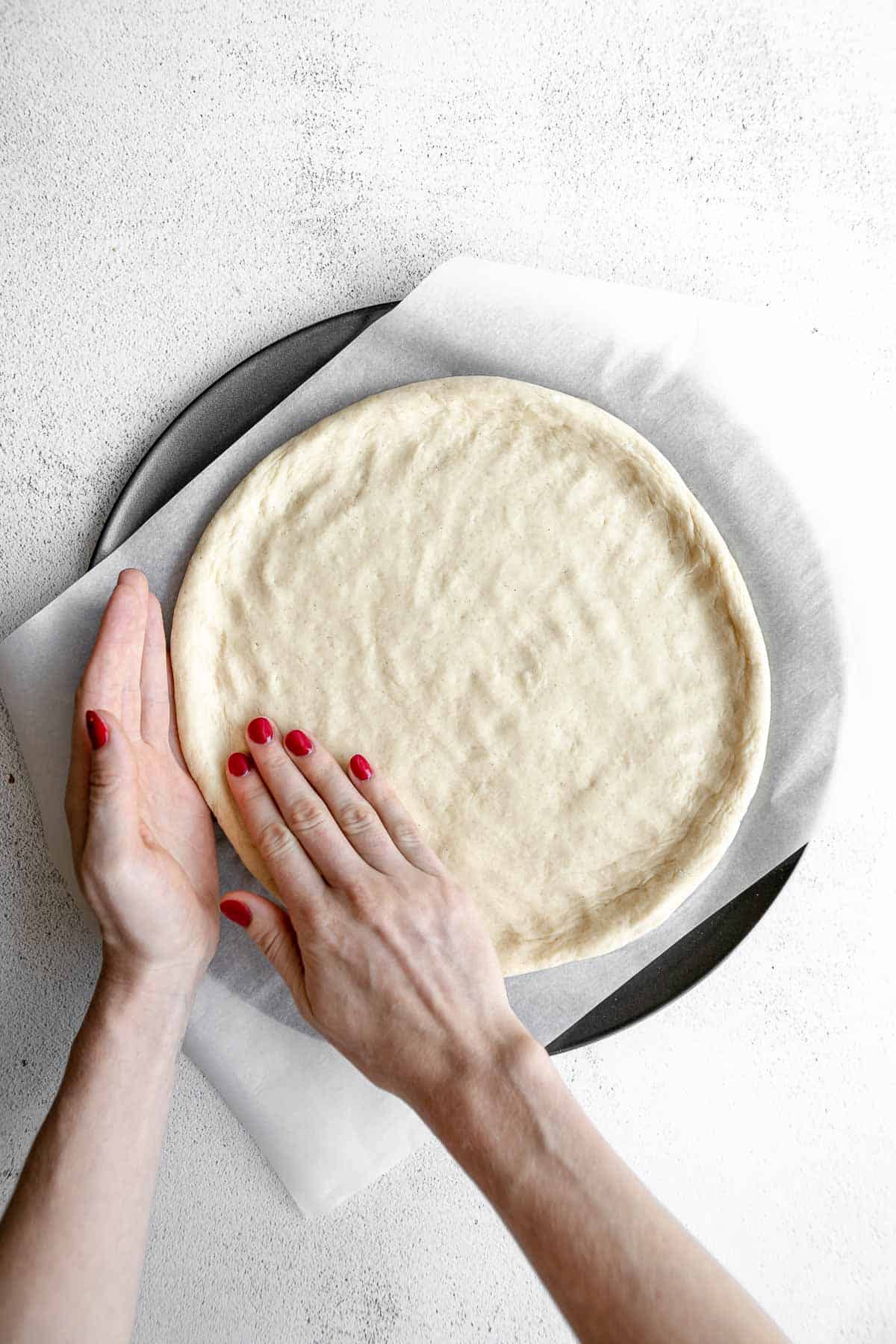
Add the dough to a floured piece of parchment paper and knead in 1-2 more tablespoons of flour until it forms into a smooth ball. Avoid adding too much flour, just enough until a ball dough forms and the dough isn’t as sticky.
Use a floured rolling pin and roll into a roughly 12 inch circle. I like to keep the crust fairly thick, you will be able to get a larger pizza or two smaller pizza if you prefer it thinner, just depends on your preference.
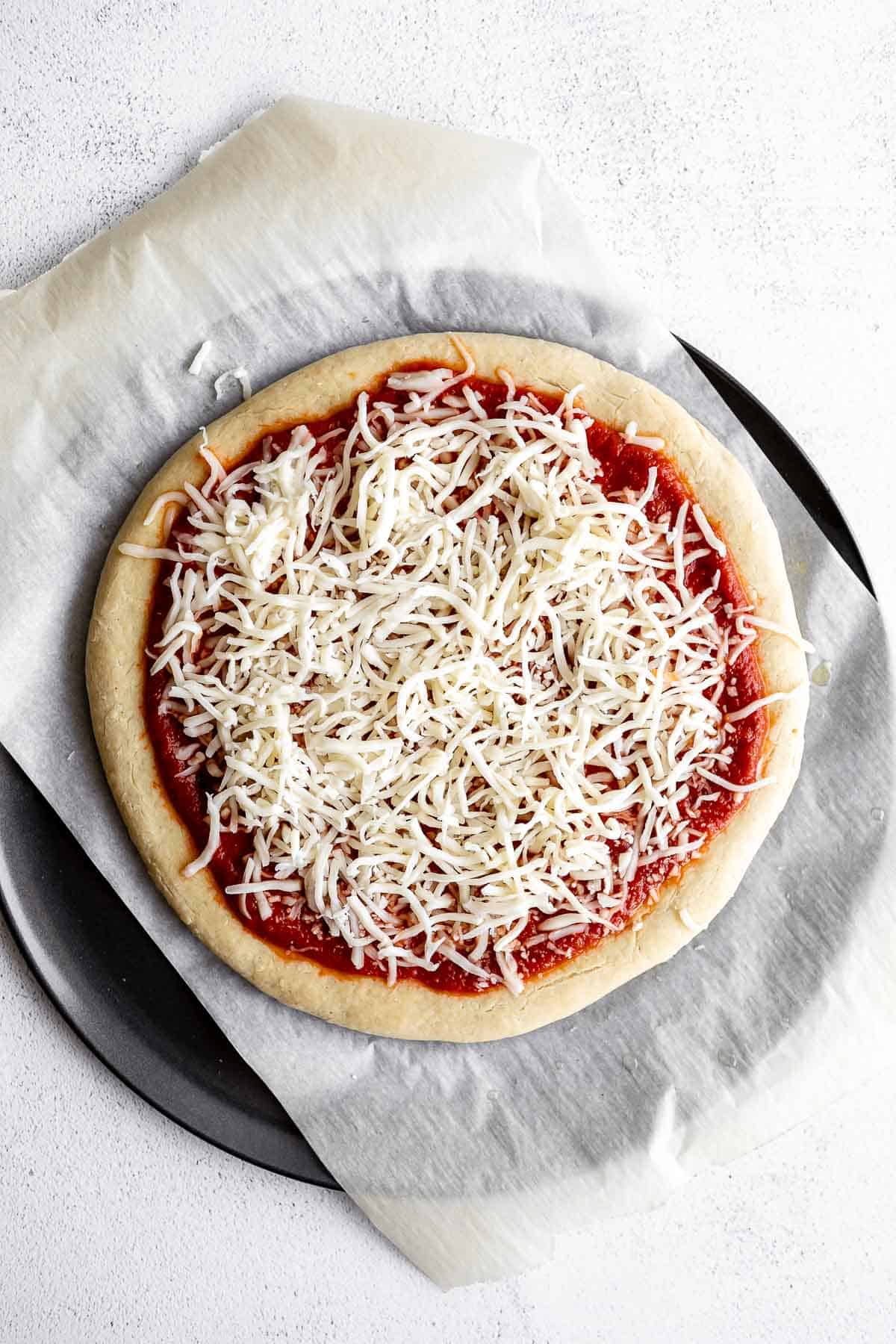
Generously brush the top of the crust with olive oil and bake for 12 minutes. Remove from the oven, add sauce and any desired toppings and bake an additional 8-12 minutes. Feel free to bake for longer if you like it crispier or shorter if you prefer it doughier.
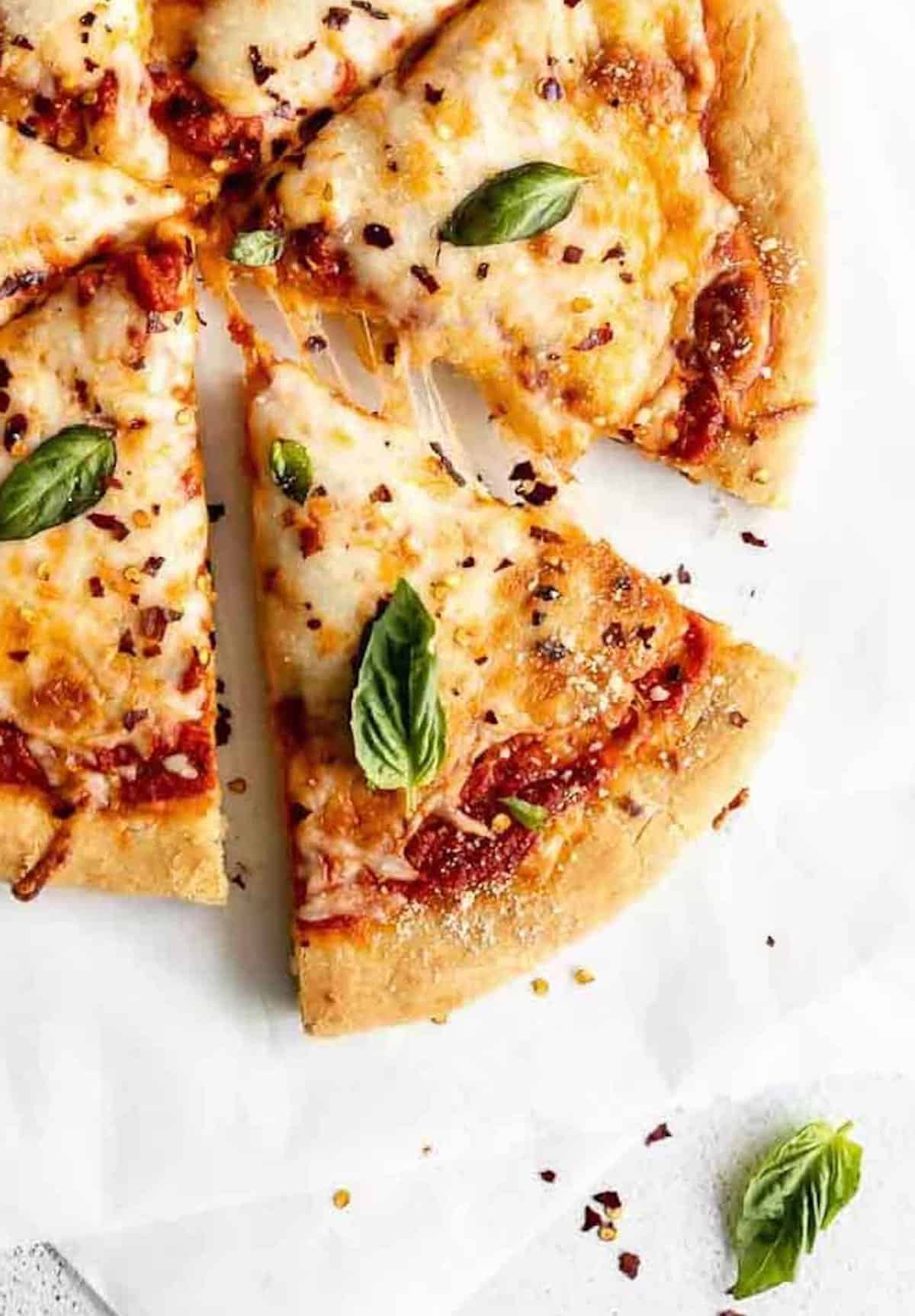
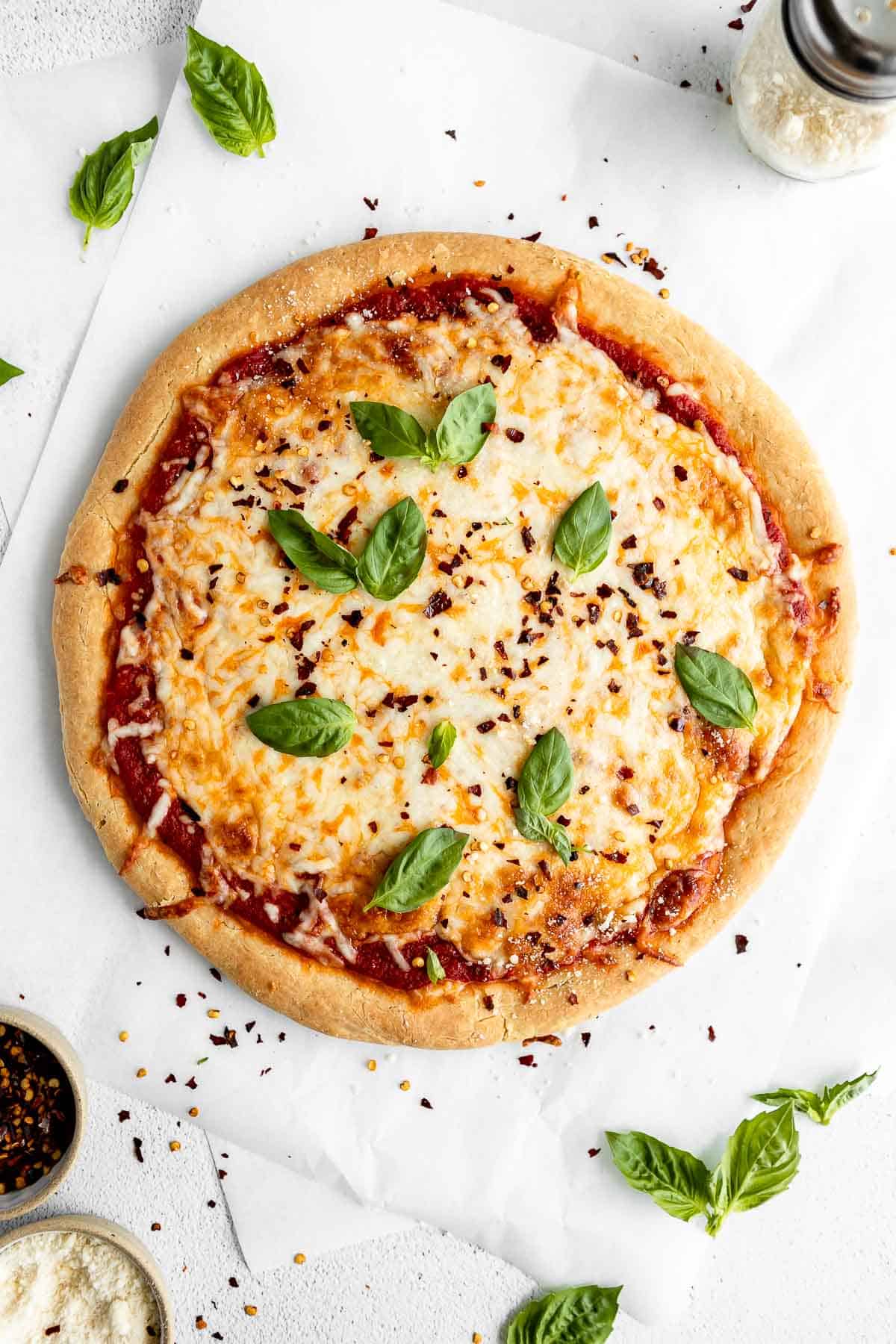
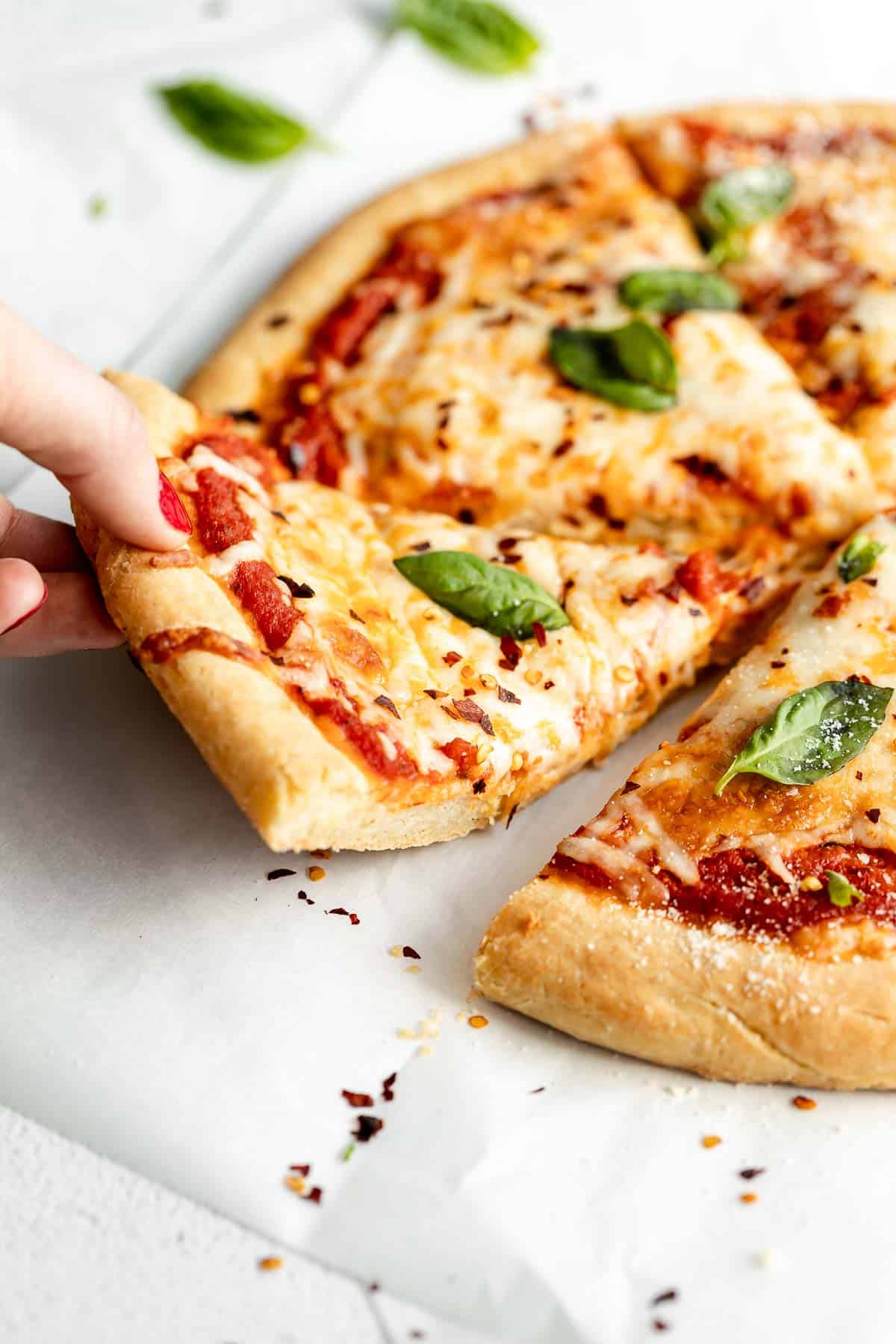
Remove from the oven and let cool for a few minutes, then slice and enjoy! Try my marry me chicken pasta or gluten free pizza rolls next!
Key ingredients
FLOUR. I used and recommend the Bob’s Red Mill 1:1 Baking Flour. It will give a fluffy texture but still hold everything together really well thanks to the xanthan gum. If you use a different gluten free flour blend, make sure it has xanthan gum, but also understand it may yield a different result.
EGG. The egg is key in the crust for the best chewy texture. I would suggest my vegan gluten free crust instead!
WANT TO SAVE THIS RECIPE?
YEAST. Yeast is key for getting that fluffy texture! You need instant active yeast for this recipe. If you want a pizza without yeast, try my chickpea pizza crust.
WATER. We’ll activate the yeast with some sugar and warm water, which will also add moisture to the dough.
OIL. Olive oil not only adds a lot of fresh flavor to the dough, but ensures it’s nice and moist. I don’t recommend any subs here.
Working with yeast
I used to be very intimidated to work with yeast, but it truly is much easier than you may think! There are just a few key things to keep in mind. First, make sure you’re using instant yeast for this recipe. It is key to ensure we don’t need to let the dough rise twice.
Second, the temperature of the water can’t be too hot or it will kill the yeast. Around 110 degrees Fahrenheit is what we’re aiming for. I suggest checking with a meat thermometer to ensure it isn’t any higher than 115 Fahrenheit.
Finally, be sure to let the dough rise for the full hour. It should roughly double in size which means the yeast is active and the crust will be nice and chewy!
Why is the dough sticky?
This gluten free pizza dough is going to start out a bit sticky – this is normal. We want to have plenty of moisture in the dough while it is rising to ensure the yeast can remain active, so we’ll add extra flour to the dough just before it gets rolled out.
To help with some of the stickiness, we will refrigerate the dough for about 15 minutes after it rises. This will make it a bit easier to work with, especially once a bit of extra flour is added. You want to avoid adding too much flour because it will dry out the dough and yeast thrives in moisture!
Prep it in advance!
You can make this dough up to 24 hours in advance. Let it rise at room temperature for 1 hour, then cover tightly and transfer the dough ball to the fridge for up to 24 hours. Roll out as usual, par-bake, top with your favorite sauce and toppings and bake again!
How to freeze gluten free pizza dough
To freeze this gluten free pizza dough, follow all of the steps as usual, and after you par-bake the crust, let it cool then freeze for up to 1 month.
I suggest wrapping it tightly in plastic wrap to prevent any freezer burn. When you’re ready to eat, just add your toppings and bake at 425 for about 10-15 minutes.
You’ll also love..
Lastly, if you want more recipes straight to your inbox, be sure to subscribe to my email list. As always, if you make this recipe, be sure to tag me on instagram and leave a comment below so I can see your creation!

Gluten Free Pizza Dough
by: claire cary
Ingredients
- 1 packet instant yeast
- ¾ cup + 2 tablespoons water
- 1 tablespoon white sugar
- 2 ½ cups gluten free all purpose 1:1 baking flour* with xanthan gum
- 1 teaspoon salt
- 1 teaspoon baking powder
- 5 tablespoons olive oil
- 1 egg
- 1 teaspoon vinegar white or apple cider
Instructions
- Microwave the water for about 30 seconds or until it reaches 110-115 degrees Fahrenheit. You don’t want it too hot or it will kill the yeast, but it needs to be warm enough to activate the yeast.
- Mix in the sugar and one packet of yeast, stir together and let sit for 5 minutes.
- Meanwhile, whisk together the flour, baking powder and salt. Add in the whisked egg, vinegar, olive oil and water/yeast mixture.
- Mix together with a wooden spoon or rubber spatula until a dough forms. It will likely be a bit sticky at this point.
- Cover with plastic wrap then cover with a towel and let sit in a warm place for 1 hour to rise. I like to put it in the oven.
- After 1 hour, preheat the oven to 425 and let the dough sit in the fridge for 15 minutes. This will make it easier to roll out.
- Add the dough to a floured piece of parchment paper and knead in 1-2 more tablespoons of flour until it forms into a smooth ball. Avoid adding too much flour, just enough until a ball dough forms and the dough isn’t as sticky.
- Use a floured rolling pin and roll into a roughly 12 inch circle. I like to keep the crust fairly thick, you will be able to get a larger pizza or two smaller pizza if you prefer it thinner, just depends on your preference.
- Generously brush the top of the crust with olive oil and bake for 12 minutes.
- Remove from the oven, add sauce and any desired toppings and bake an additional 8-12 minutes. Feel free to bake for longer if you like it crispier or shorter if you prefer it doughier.
- Remove from the oven and let cool for a few minutes, then slice and enjoy!
Notes

Comments
-
Awesome sauce! I have tried many. This is the best, chewy, light for gf, easy. Wow, thank you 🙂

-
I have tried many recipes and anxious to try this one. Have you or anybody tried with a pizza stone ? Just wondering because you get the feeling baking on stone is that much better but wondering if I do, is any of the baking times need changing.
-
I don’t have experience with a pizza stone, but let me know if you try it out!
-
-
This pizza dough is the bomb 💣. Absolutely love it
-
Can I use gluten free bread flour for this recipe?
-
That should be fine!
-
-
I’ve made this recipe many times and get good compliments on it. I make the 2 and freeze one. I add just a bit more flour and water so I can roll a bigger edge crust on each like traditional pizza. I make my own flour mix of brown rice, oat, tapioca starch and potato starch from another recipe – I add the xanthium gum to each recipe I make with this flour. I also add a bit of psyllium husk.
-
Thank you, Lisa! So glad you love it!
-
-
I have done something horribly wrong. I followed the instructions and everything was going fine until it came time to roll out the dough. It was a sticky mess. I added more and more and more flour up till eventually I just gave up. I ended up adding somewhere between 1/4-1/2 cup extra flour even though the recipe only calls for 2Tbs. Where did I go wrong here? Even after all that flour it was still such a sticky mess I couldn’t get it off my fingers, much less in an even layer on the cookie sheet. Help!
-
Oh no! What brand of flour did you use and was everything measured correctly? Could have been the brand but hard to say!
-
You do have to use parchment paper it just won’t work like a traditional dough you can roll out on the counter and pick up and place on a pizza pan. It will fall apart trying to do that. It is a little moister and stickier than a traditional crust dough is. I often spread the dough with my fingers quite a bit before I take my rolling pin to it. I also use tapioca starch to dust it rather than flour.
-
-
i followed the recipe exactly as written and was pleasantly surpised and pleased. Thanks for a wonderful recipe!!
-
This was my first time making pizza dough and I wanted gluten free. Not sure but I think my yeast was old cuz it didn’t really rise. This dough is super soft so I didn’t roll it out I just patted it into a circle on my tray, brushed it with avocado oil and pricked it with a fork all over so it wouldn’t shrink while par baking. After I added all my toppings baked it for 18 mins. It turned out great, I could actually hold a piece and it didn’t fall or sag. Definitely a keeper and will be using this recipe again.
-
So glad you loved it! Definitely check your yeast, that is likely the problem!
-
-
I am so excited about trying out this recipe. Can I use vegetable oil instead of olive oil?
-
Olive oil will add a better flavor, but vegetable will work in a pinch.
-
-
Omggg it’s literally so good, it’s so fluffy and rose so well, I had no idea you could have gluten free thick crust. The only thing I personally changed was that I added a lot more sugar – I kinda like the fast-food taste.
-
How much sugar did you add? I also like fast food crust.
-
-
I made this last night for my husband. It was easy and worked beautifully, giving him a 14-inch crust that was of medium thickness. It reheated today well in the air fryer. I use King Arthur’s Measure for Measure, instead of Bob’s Red Mill (taste preference) and decreased the flour measurement by 1/4 c (2 1/4 c instead of 2 1/2 c). This seemed to solve the need for additional water noted in other comments. The decrease in the KA flour amount was due to a comparison I found between BRM and KA by America’s Test Kitchen. Each gluten free flour blend has it’s own liquid absorption rate due to the mixture of ingredients used. This recipe is a keeper and will now be used often in our household! Thanks so much!
-
Perfect! Good to know that flour blend worked well!
-
-
I am making pizza for a group of 30+ people and I know that at least one of them can not have gluten so I had planned on making 2 or 3 gluten free crusts. They will all be made in a wood fired oven where cooking times are less than 3 minutes and I have not been able to find a GF recipe that will work with the short cooking time and high temperature. Do you have a recommendation for pre-cooking the crust to a point where it can be finished off the next day at 600+ degrees with toppings in a pizza oven.
-
Yes! Just par-bake it as the instructions state, then add the toppings the next day and it should be fine.
-
-
for some reason i need way more water by the time folding happened and it worked perfect ! i followed everything exactly too .. i triple checked lol!
-
So strange! Not sure why that would happen. How much more did you add?
-
-
Perfect dough!
I made 2 pizzas with this recipe, but next time i’m going to try rolling them thinner (since the dough stays together PERFECTLY!) and make 3 instead!
thanks for sharing – this was awesome.-
Amazing! Thanks, Kitty!
-
-
I plan on making this for my son tomorrow.. he is 3 and loves pizza however he is on a special diet as he is on the spectrum. I would love to try this for him and all ingredients are ok accept for one. I cannot use instant yeast quick rising yeast. However I can use red star active dry yeast, can I substitute with that type of yeast instead?
-
Yes, that will be fine!
-
leave a comment and rating